

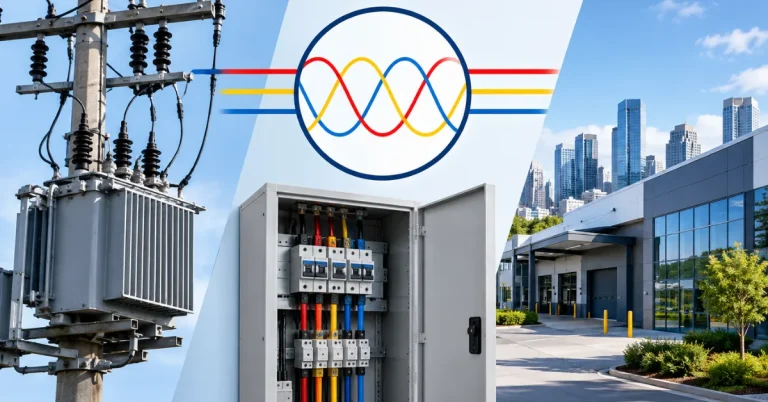
Three-phase power is an important part of Australia’s commercial and industrial electrical infrastructure. It is commonly used where businesses need to supply larger electrical loads, operate machinery or distribute power efficiently throughout a commercial facility.
But what exactly is three-phase power, how does it differ from single-phase power, and when does a business need it?
This guide explains 3 phase power in Australia, including how three-phase electrical systems work, where they are commonly used, their benefits and what businesses should consider when additional electrical capacity is required.
What Is 3 Phase Power?
Three-phase power is an electrical power system that uses three alternating electrical currents, each separated by approximately 120 degrees.
Instead of relying on a single alternating current, three-phase systems distribute electrical power across three phases.
This arrangement provides a more consistent supply of power and can efficiently support larger electrical loads.
Three-phase power is commonly found in:
- Commercial buildings
- Industrial facilities
- Warehouses
- Workshops
- Manufacturing facilities
- Large offices
- Retail properties
- Commercial kitchens
- Mechanical services
- Machinery installations
For businesses with significant electrical requirements, three-phase power can provide greater capacity and flexibility than a standard single-phase supply.
Single Phase vs 3 Phase Power
Single-phase power
Single-phase power is commonly used for smaller electrical loads.
It can be suitable for:
- Homes
- Small offices
- Small retail premises
- Basic lighting
- Computers
- General power outlets
- Smaller appliances
Three-phase power
Three-phase power is generally used where larger or more demanding electrical loads are present.
It can be suitable for:
- Industrial machinery
- Large air-conditioning systems
- Pumps
- Motors
- Compressors
- Workshop equipment
- Commercial kitchens
- Large refrigeration systems
- Manufacturing equipment
The choice isn’t simply about which system is “better.” It depends on the electrical requirements of the premises and the equipment being operated.
How Does 3 Phase Power Work?
A three-phase electrical supply contains three separate phases.
Each phase carries an alternating current, with the phases offset from each other.
This arrangement allows electrical loads to be distributed across the available phases.
For businesses, balanced distribution is important because it can help electrical systems operate efficiently and avoid placing excessive demand on one phase.
A commercial electrical contractor can assess the expected loads and determine how electrical equipment should be distributed across the available supply.
Why Do Businesses Use Three-Phase Power?
Three-phase systems provide several advantages for commercial and industrial applications.
1. Supports Larger Electrical Loads
Businesses operating machinery or large electrical equipment may require more electrical capacity than a typical single-phase supply can provide.
Three-phase power can support larger loads and provide the capacity needed for many commercial applications.
2. Efficient Power Distribution
Three-phase systems can distribute electrical loads across multiple phases.
This can be particularly useful in larger commercial and industrial installations where many pieces of equipment operate simultaneously.
3. Suitable for Motors
Many commercial and industrial motors are designed to operate using three-phase power.
This includes motors used in:
- Pumps
- Compressors
- HVAC systems
- Manufacturing equipment
- Mechanical systems
- Industrial machinery
Three-phase supplies can provide the characteristics required for many motor-driven applications.
4. Supports Business Growth
A business may start with relatively modest electrical requirements and later introduce additional machinery, air-conditioning systems or technology.
Having suitable electrical capacity can make it easier to accommodate future requirements.
However, additional equipment should always be assessed to determine whether the existing electrical installation has sufficient capacity.
Where Is 3 Phase Power Used in Australia?
Commercial Offices
Large offices can have substantial electrical demand from:
- Air conditioning
- Server and network equipment
- Lighting
- Kitchen facilities
- General power
- Building services
- EV charging
- Other specialised equipment
Not every office requires three-phase power, but larger premises or buildings with significant electrical loads may.
Warehouses
- Material handling equipment
- Mechanical systems
- Large lighting installations
- Refrigeration
- Pumps
- Compressors
- Charging systems
- Workshop equipment
Workshops
Workshops often require three-phase power for equipment such as:
- Welders
- Compressors
- Lathes
- Machinery
- Pumps
- Industrial tools
Manufacturing Facilities
Manufacturing environments can have substantial and continuous electrical loads.
Three-phase power may be used for production machinery, motors, conveyors, compressors, pumps and other equipment.
Does Every Business Need 3 Phase Power?
No.
A business does not automatically need three-phase power simply because it operates from a commercial property.
The appropriate electrical supply depends on:
- Connected equipment
- Maximum demand
- Machinery requirements
- Building services
- Air-conditioning requirements
- Future expansion
- Existing electrical infrastructure
- Available supply capacity
A small office with computers, monitors, lighting and standard appliances may not require a three-phase supply.
A workshop operating multiple motors and machinery may have very different requirements.
The correct approach is to assess the actual electrical load rather than choosing a supply based solely on the type of business.
How Do You Know If Your Business Needs 3 Phase Power?
Several signs may indicate that a business needs additional electrical capacity.
For example:
- New machinery is being installed
- Existing equipment is regularly operating near capacity
- Large motors are being introduced
- A new commercial kitchen is being installed
- Air-conditioning requirements are increasing
- The business is expanding
- Additional production equipment is being added
- Existing electrical infrastructure is becoming inadequate
- The switchboard requires significant upgrades
However, these signs do not automatically mean that three-phase power is required.
An electrical assessment can determine whether the existing supply and distribution system can support the proposed load.
Can You Upgrade From Single Phase to Three Phase?
In some situations, a property may be able to be upgraded from single-phase to three-phase power.
However, the feasibility and requirements depend on the existing electrical installation and available electricity supply.
An upgrade may involve consideration of:
- Incoming supply
- Metering arrangements
- Main switchboard
- Main cables
- Protection devices
- Distribution boards
- Existing electrical loads
- New equipment
- Maximum demand
- Utility requirements
The switchboard may also require modification or replacement.
For businesses considering additional capacity, understanding the scope and cost of switchboard work is important. Our guide to commercial switchboard upgrade considerations explains some of the factors that can influence a commercial switchboard upgrade.
Three Phase Power and Switchboards
The switchboard is a critical component of a commercial three-phase electrical system.
It distributes electrical power throughout the property and houses protective devices and switching equipment.
When a business adds significant electrical loads, the existing switchboard should be assessed.
Important considerations can include:
- Available capacity
- Main switch rating
- Distribution arrangements
- Circuit protection
- Cable sizing
- Phase loading
- Physical switchboard space
- Condition of existing equipment
- Future electrical requirements
Simply adding new circuits without considering the overall system can create capacity and safety issues.
This is why electrical capacity planning should be completed before major equipment is installed.
What Does Load Balancing Mean?
In a three-phase system, electrical loads should be distributed appropriately between the three phases.
This is commonly referred to as load balancing.
If too much load is concentrated on one phase, it can result in an imbalance that may affect the electrical system.
A commercial electrician can assess the existing installation and determine whether loads are appropriately distributed.
Load balancing becomes particularly important when businesses add:
- New machinery
- Large air-conditioning systems
- EV chargers
- Commercial kitchen equipment
- Additional power circuits
- Production equipment
3 Phase Power for Commercial Machinery
Industrial and commercial machinery can have significant electrical requirements.
Before installing new machinery, businesses should consider:
- Voltage requirements
- Phase requirements
- Equipment current rating
- Starting current
- Circuit protection
- Cable requirements
- Isolation requirements
- Available electrical capacity
- Manufacturer specifications
Some machinery may specifically require a three-phase supply.
The equipment manufacturer’s electrical specifications should be reviewed before installation.
Three Phase Power and Commercial Electrical Services
Commercial and industrial businesses can have very different electrical requirements.
An office fit-out may primarily involve power outlets, lighting and data cabling, while an industrial facility may require machinery supplies, motors, large distribution systems and higher electrical capacity.
Understanding the difference between these environments can help businesses engage the appropriate electrical expertise.
For more information, read our guide to commercial vs industrial electrical services.
Is 3 Phase Power More Expensive?
Three-phase power itself is not necessarily more expensive in every situation.
The cost depends on the installation and the work required to provide the appropriate electrical capacity.
For an existing property, upgrading to three-phase power may involve significant electrical work.
Potential cost factors include:
- Supply upgrade requirements
- Switchboard modifications
- New cabling
- Protection equipment
- Metering
- Distribution board upgrades
- Labour
- New circuits
Site access - Equipment requirements
- Electrical authority requirements
For this reason, businesses should obtain a site-specific assessment and quotation rather than assuming a standard upgrade cost.
3 Phase Power During an Office or Commercial Fit-Out
Electrical capacity should be considered early in a commercial fit-out.
The electrical design should account for both current and expected future loads.
For example, a business may initially require:
- General power
- Office lighting
- Computers
- Data equipment
- Air conditioning
- But future requirements may include:
- Additional employees
- More air conditioning
- EV charging
- Larger kitchen equipment
- Server equipment
- Specialist machinery
Planning electrical capacity before construction begins can reduce the risk of expensive modifications later.
Three-phase requirements should therefore be discussed alongside the broader Power & Data services needed for the premises.
3 Phase Power and Future Business Growth
Electrical planning shouldn’t stop at today’s equipment.
If a business expects to expand, additional electrical capacity may become necessary.
Consider:
- Planned machinery
- Future office expansion
- Additional air conditioning
- New production lines
- Additional refrigeration
- EV charging
- Larger IT infrastructure
- New workshop equipment
A suitable electrical design can provide flexibility for future requirements while avoiding unnecessary installation costs.
The objective isn’t simply to install the largest possible electrical system. It is to provide capacity that matches the business’s realistic requirements.
Common Signs of Electrical Capacity Problems
Businesses should pay attention to signs that the existing electrical installation may need assessment.
These can include:
- Frequent circuit breaker trips
- Equipment causing nuisance tripping
- Difficulty adding new equipment
- Overloaded circuits
- Excessive use of extension leads
- Hot electrical components
- Outdated switchboards
- Limited spare circuit capacity
- Planned equipment exceeding existing capacity
These signs should not be ignored.
A qualified electrician can assess the electrical installation and determine whether additional capacity, circuit modifications or switchboard work is required.
Three Phase Power Planning Checklist
Before installing significant new electrical equipment, businesses should consider:
- Identify all new equipment
- Check equipment voltage and phase requirements
- Determine expected electrical loads
- Review existing electrical capacity
- Assess switchboard capacity
- Check available circuit space
- Consider phase loading
- Review cable and protection requirements
- Consider future expansion
- Coordinate electrical work with other contractors
- Arrange professional electrical assessment
- Obtain required approvals where applicable
- Test the completed installation
This approach helps businesses make electrical capacity decisions based on actual requirements rather than assumptions.
When Should You Speak to an Electrician?
Businesses should consider getting professional electrical advice before:
- Purchasing major machinery
- Expanding a commercial property
- Installing large
- HVAC equipment
- Adding significant refrigeration
- Installing EV charging infrastructure
- Undertaking an office fit-out
- Upgrading production equipment
- Modifying a commercial switchboard
- Increasing the property’s electrical load
Getting advice early can identify potential capacity limitations before equipment arrives or construction begins.
Professional Power & Data Services for Perth Businesses
Three-phase power is an important consideration for many commercial and industrial electrical installations, but not every business needs the same electrical supply.
The right solution depends on the property’s existing infrastructure, equipment, electrical loads and future requirements.
Symbient Electrical provides commercial Power & Data services across Perth, supporting businesses with electrical power distribution, power installations, data cabling and related commercial electrical requirements.
If your business is planning a fit-out, expansion or new equipment installation, electrical capacity should be considered before work begins.
Final Thoughts
Understanding 3 phase power in Australia can help business owners and facility managers make better decisions when planning electrical upgrades, machinery installations and commercial fit-outs.
Three-phase power can provide an effective solution for larger electrical loads and equipment, but it isn’t automatically required for every commercial property.
The right electrical solution depends on the actual requirements of the business, existing infrastructure and future plans.
Before adding major electrical loads, have the existing installation assessed and determine whether additional capacity or a three-phase upgrade is appropriate.
Need More Electrical Capacity?
Not sure whether your business needs additional electrical capacity? Contact Symbient Electrical to discuss your requirements.