

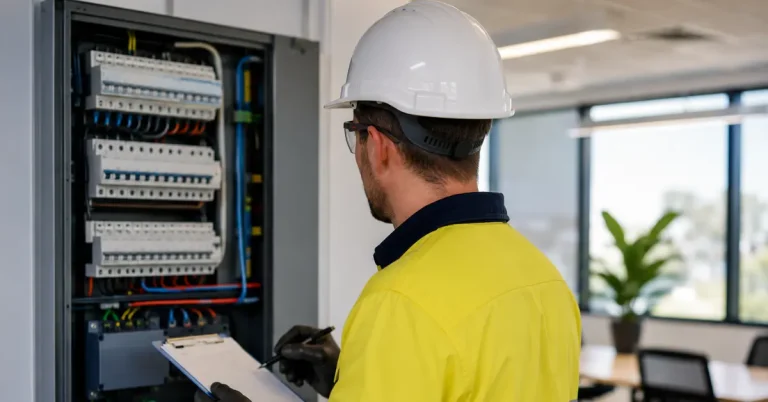
If you’re searching for commercial electrical maintenance in Perth, the best approach is to follow a structured preventive maintenance plan rather than waiting for electrical faults to occur.
A well-maintained electrical system can help improve workplace safety, reduce unplanned downtime, extend the life of electrical assets and identify potential issues before they become costly repairs. Whether you manage an office, warehouse, retail store, healthcare facility or industrial site, regular inspections and preventive electrical maintenance are essential for reliable day-to-day operations.
This practical checklist is designed to help Perth businesses understand what should be inspected, common warning signs to look for and when it’s time to arrange a professional electrical maintenance assessment.
Why Preventive Electrical Maintenance Matters
Commercial electrical systems are under constant demand. Over time, normal wear and tear, increased electrical loads and environmental conditions can affect their performance.
Rather than waiting for equipment failure, preventive electrical maintenance focuses on identifying potential issues early, helping businesses:
- Improve workplace electrical safety
- Reduce unexpected equipment failures
- Minimise operational downtime
- Support business continuity
- Extend the lifespan of electrical infrastructure
- Plan maintenance more effectively
- Reduce disruption to staff, customers and tenants
For businesses operating multiple sites or facilities, a planned maintenance schedule also makes budgeting and asset management more predictable.
Commercial Electrical Maintenance Checklist
1. Switchboards & Distribution Boards
The switchboard is the heart of your commercial electrical system and should be inspected regularly.
Checklist
☐ Check for signs of overheating or discolouration.
☐ Ensure switchboard labels remain clear and accurate.
☐ Look for loose or damaged covers.
☐ Confirm the switchboard area remains clean and unobstructed.
☐ Check for unusual buzzing noises or burning smells.
☐ Verify there are no obvious signs of corrosion or moisture.
Why It Matters
Switchboard issues can affect multiple electrical circuits and may lead to unexpected outages if left unaddressed.
2. Lighting Systems
Commercial lighting contributes to both workplace safety and productivity.
Checklist
☐ Replace flickering or failed light fittings.
☐ Inspect emergency lighting for visible damage.
☐ Check external lighting around entrances and car parks.
☐ Ensure lighting controls operate correctly.
☐ Inspect high-bay lighting in warehouses where applicable.
Why It Matters
Poor lighting can affect workplace safety, reduce visibility and create unnecessary maintenance issues.
3. Power Outlets & Electrical Circuits
Power outlets and circuits experience daily use and should be monitored for signs of wear.
Checklist
☐ Inspect outlets for cracks or damage.
☐ Check faceplates remain securely fixed.
☐ Look for signs of overheating.
☐ Ensure extension leads are used appropriately.
☐ Identify overloaded power boards.
☐ Report recurring circuit breaker trips.
Why It Matters
Damaged outlets and overloaded circuits can affect equipment reliability and increase electrical safety risks.
4. Safety Switches (RCDs)
Residual Current Devices (RCDs), commonly known as safety switches, play an important role in protecting people from electrical faults.
Checklist
☐ Confirm RCDs are clearly identified.
☐ Arrange professional testing where required.
☐ Record previous testing dates.
☐ Investigate repeated nuisance tripping.
☐ Replace damaged or defective devices where recommended.
Why It Matters
Properly functioning RCDs are an important part of workplace electrical safety and should be included in every maintenance program.
5. Emergency & Exit Lighting
Emergency lighting supports safe building evacuation during power interruptions or emergencies.
Checklist
☐ Check exit signs remain illuminated.
☐ Inspect emergency light fittings.
☐ Ensure fittings are not obstructed.
☐ Schedule routine testing in accordance with applicable requirements.
☐ Record maintenance activities.
Why It Matters
Maintaining emergency and exit lighting helps businesses prepare for unexpected events while supporting workplace safety obligations.
6. Data & Network Infrastructure
Modern workplaces rely on reliable communications infrastructure as much as electrical systems.
Checklist
☐ Inspect communications cabinets for damage.
☐ Ensure patch panels remain organised.
☐ Check cable management.
☐ Look for damaged network outlets.
☐ Review equipment ventilation.
☐ Report damaged structured cabling.
Why It Matters
A well-maintained network infrastructure helps support business operations, cloud applications, security systems and communication platforms.
Maintenance Checklist by Business Type
Although every workplace has unique requirements, the focus of preventive maintenance may vary depending on the environment.
Business Type | Priority Maintenance Areas |
Office | Switchboards, lighting, power outlets, network cabling |
Warehouse | Switchboards, high-bay lighting, machinery circuits, emergency lighting |
Retail | Lighting, power outlets, emergency exits, customer areas |
Healthcare | Critical power systems, RCDs, emergency lighting, communications |
Industrial | Switchboards, distribution boards, heavy-duty circuits, electrical equipment |
This checklist provides a starting point only. A professional maintenance program should be tailored to your building, equipment and operational requirements.
Routine Visual Checks vs Professional Maintenance
Not every inspection requires specialised testing, but it’s important to understand the difference between routine visual checks and work that should be completed by a qualified commercial electrician.
Routine Visual Checks | Professional Electrical Maintenance |
Look for visible damage | Electrical testing and diagnostics |
Report unusual noises or smells | Switchboard inspections |
Check lighting operation | RCD testing (where required) |
Keep switchboards accessible | Preventive maintenance planning |
Record observations | Repairs and component replacement |
Identify recurring faults | Compliance and maintenance reporting |
Routine inspections can help identify obvious issues early, while professional maintenance provides a more comprehensive assessment of your electrical systems.
Warning Signs Your Business Should Never Ignore
Routine inspections can identify obvious issues, but some warning signs indicate that your electrical system should be assessed by a qualified commercial electrician as soon as practical.
Watch for:
- Frequent circuit breaker trips
- Flickering or dimming lights
- Burning smells near switchboards or outlets
- Warm or discoloured power outlets
- Unusual buzzing sounds from electrical equipment
- Electrical equipment that intermittently loses power
- Damaged cables or exposed wiring
- Moisture around electrical installations
- Emergency lighting that fails to operate correctly
If your business is experiencing recurring electrical faults, our guide on Common Electrical Issues in Commercial Properties and How to Fix Them explains some of the most common causes and when professional investigation may be required.
Keep Accurate Maintenance Records
An effective maintenance programme is supported by clear and organised documentation. Keeping records helps businesses monitor the condition of their electrical infrastructure, plan future maintenance and demonstrate that electrical safety is being actively managed.
Useful records include:
- Inspection reports
- Maintenance schedules
- Switchboard inspection records
- RCD testing reports (where applicable)
- Emergency lighting test records
- Repair and replacement history
- Asset registers
- Contractor service reports
Maintaining this information in one location also makes future inspections and maintenance planning more efficient.
Suggested Preventive Maintenance Framework
Rather than responding only when problems arise, consider implementing a structured maintenance programme.
Stage | Action |
Monthly | Conduct routine visual inspections and report any visible defects. |
Quarterly | Review maintenance records, identify recurring issues and inspect high-use areas. |
Annually | Arrange a comprehensive inspection of commercial electrical systems by a qualified electrician. |
As Required | Address faults, equipment damage or operational changes promptly. |
Note: Inspection frequencies may vary depending on your workplace, industry, equipment and applicable Australian Standards or WA regulations. Always verify current requirements before establishing a maintenance schedule.
Practical Maintenance Planning Checklist
Use this framework when reviewing your maintenance programme.
Assess Your Electrical Assets
Create an inventory of key electrical systems, including switchboards, lighting, emergency systems, distribution boards and network infrastructure.
Prioritise High-Risk Areas
Focus on equipment and locations that experience high electrical demand, heavy usage or exposure to harsh environmental conditions.
Schedule Preventive Maintenance
Develop a planned maintenance calendar rather than relying on reactive repairs.
Review After Changes
Office expansions, machinery installations, renovations or increased electrical loads may require your maintenance programme to be updated.
Keep Documentation Current
Record inspection dates, observations, completed maintenance and any recommended corrective actions.
When Should You Arrange Professional Maintenance?
Routine visual checks are valuable, but they do not replace professional inspections.
You should consider arranging a maintenance assessment if:
- Your building has ageing electrical infrastructure.
- You’re experiencing recurring electrical issues.
- Your business has expanded or installed additional equipment.
- You’re planning a commercial fit-out or renovation.
- Maintenance records are incomplete or outdated.
- You want to reduce the risk of unexpected electrical failures.
Regular maintenance can also support business continuity by identifying potential issues before they disrupt operations.
For additional guidance on proactive inspections, read our article on How Commercial Electrical Inspections Help Prevent Costly Downtime, which explains how planned inspections contribute to safer and more reliable commercial facilities.
Build a Preventive Maintenance Plan With Symbient Electrical
Preventive maintenance is one of the most effective ways to protect your commercial electrical infrastructure, reduce unplanned downtime and support safe business operations.
Whether you manage a single office, multiple commercial properties or a large industrial facility, a structured maintenance programme helps identify issues before they become costly repairs.
Symbient Electrical provides Commercial Electrical Services across Perth, supporting businesses with planned maintenance, inspections and ongoing electrical support tailored to their operational requirements.
If you’d like assistance developing a preventive maintenance schedule for your premises, Contact Us to arrange a maintenance assessment and discuss a programme suited to your business.
For more workplace safety guidance, you may also find our article Electrical Safety in the Workplace: What Every Perth Business Should Know helpful.
FAQs
1. What is commercial electrical maintenance?
Commercial electrical maintenance involves the planned inspection, testing and servicing of electrical systems to help improve reliability, reduce downtime and support workplace safety.
2. Why is preventive electrical maintenance important?
Preventive maintenance helps identify potential issues before they lead to equipment failures, operational disruption or costly emergency repairs.
3. How often should commercial electrical systems be inspected?
Inspection frequency depends on the type of workplace, equipment, operating environment and applicable Australian Standards or regulatory requirements. A qualified electrician can recommend an appropriate maintenance schedule.
4. Can facility managers perform routine inspections?
Facility managers can carry out basic visual inspections, such as checking for visible damage or reporting unusual electrical behaviour. Electrical testing and repairs should be completed by a qualified electrician.
5. What should be included in maintenance records?
Maintenance records should include inspection dates, observations, repairs, testing reports, asset information and recommendations for future maintenance.
6. Does every business need a preventive maintenance programme?
Most commercial properties benefit from a planned maintenance programme, particularly where reliable electrical systems are essential for day-to-day operations.