

Commercial Lease Electrical Checklist: What to Inspect Before You Sign or Hand Back a Perth Tenancy
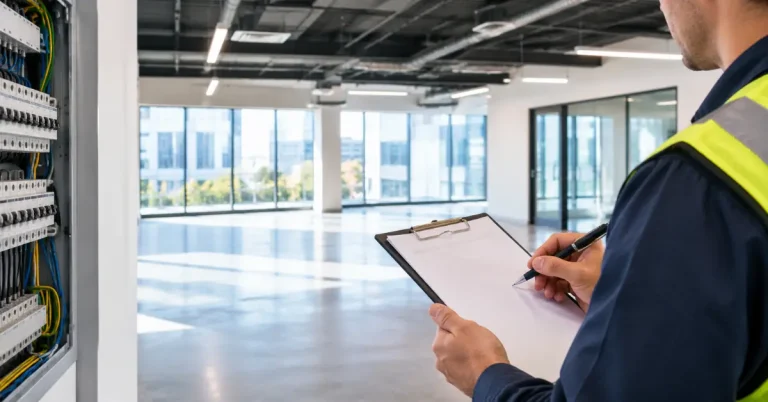
Taking on a commercial property in Perth involves more than reviewing the rent, location and floor area. The electrical condition of the tenancy can affect your operating costs, workplace safety, fit-out budget and ability to use the premises as planned.
Before signing a commercial lease, businesses should understand what electrical infrastructure is already available, what condition it is in and whether additional work will be required. The same applies when handing a tenancy back to a landlord, particularly where the lease requires the premises to be returned to a particular condition.
A commercial lease electrical inspection can help identify potential problems before they become unexpected costs.
This commercial lease electrical checklist covers the key electrical items Perth businesses should consider before moving into a tenancy or preparing a property for handover.
Why Check the Electrical System Before Signing a Commercial Lease?
Electrical infrastructure is often hidden behind walls, ceilings, switchboards and cable pathways. A tenancy may look ready for occupation while still requiring significant electrical work.
For example, a business may discover after signing a lease that the existing electrical system cannot comfortably support:
- New office equipment
- Additional workstations
- Servers and networking equipment
- Air-conditioning requirements
- Commercial appliances
- Machinery
- Lighting upgrades
- Additional power outlets
- EV charging infrastructure
- Future business expansion
Identifying these requirements before committing to a lease gives the business a better understanding of the likely electrical fit-out and upgrade requirements.
It can also help when discussing landlord responsibilities, tenant improvements and make-good obligations.
Commercial Lease Electrical Checklist
1. Inspect the Main Switchboard
The switchboard is one of the first areas to review.
A commercial electrical inspection should consider the condition and configuration of the main switchboard and relevant distribution boards.
Look for issues such as:
- Damaged or deteriorated equipment
- Signs of overheating or burning
- Missing or unclear circuit identification
- Limited space for future circuits
- Outdated components
- Poorly arranged wiring
- Signs of previous modifications
- Obstructions around the switchboard
- Evidence of water or environmental damage
A switchboard that appears functional may still have limited capacity for a new fit-out.
If you are planning significant changes to the tenancy, ask a licensed electrical contractor to assess whether the existing electrical infrastructure is suitable for your proposed loads.
2. Check Electrical Capacity
One of the most important questions before signing a commercial lease is whether the available electrical capacity is sufficient for your business.
Consider your current and future requirements.
For an office, this could include:
- Computers and monitors
- Printers and copiers
- Kitchen equipment
- Air-conditioning
- Meeting room equipment
- Servers and communications equipment
- Lighting
- Chargers
- Additional workstations
For warehouses, workshops and industrial premises, requirements may be substantially higher because of machinery, three-phase equipment, refrigeration, compressors or other high-load equipment.
If your proposed business operations require more capacity than the tenancy currently provides, an electrical upgrade may need to be considered before the lease begins.
This is particularly important because electrical upgrades can involve additional planning, equipment and installation costs.
3. Review RCD Protection
Residual current devices (RCDs), commonly known as safety switches, help reduce the risk of electric shock by disconnecting electricity when a fault is detected.
WA’s Building and Energy advises that RCD requirements for commercial premises are covered by workplace safety requirements, while WorkSafe WA provides guidance on the use and testing of RCDs in workplaces.
During a commercial tenancy inspection, ask for the relevant RCD protection to be checked and documented where appropriate.
A professional inspection can help identify:
- Whether relevant circuits have appropriate protection
- Whether RCDs are functioning correctly
- Whether testing records are available
- Whether faulty or unsuitable devices require attention
Do not assume that an RCD simply works because it is installed. Testing and maintenance are important parts of electrical safety.
4. Check Power Points and Electrical Outlets
Walk through the entire tenancy and consider whether the existing power outlets are suitable for the way your business will operate.
Check the location and condition of outlets in:
- Open-plan work areas
- Offices
- Meeting rooms
- Reception areas
- Kitchens
- Storage areas
- Workshops
- Plant rooms
- Warehouse areas
Also consider whether additional outlets will be required for your planned layout.
A common mistake is to assess a tenancy based on its current workstation layout rather than the layout the incoming business actually needs.
Moving desks, installing partition walls or creating new meeting rooms can significantly change power requirements.
5. Inspect Lighting
Lighting should be assessed before signing a lease, particularly where the existing lighting system is old or unsuitable for the intended use.
Consider:
- General lighting
- Task lighting
- Emergency lighting
- Exit signs
- Lighting controls
- Damaged fittings
- Uneven illumination
- Flickering lights
- Energy efficiency
- Lighting requirements for the proposed layout
If you are planning an office fit-out, lighting should be considered alongside the electrical and data layout rather than treated as a separate final-stage installation.
A lighting system that works for the previous tenant may not work effectively for your new workspace.
6. Check Emergency Lighting and Exit Signs
Commercial premises may have emergency lighting and exit signage that require appropriate inspection, testing and maintenance.
During the tenancy assessment, identify the existing emergency lighting and exit signs and determine whether they form part of the landlord’s or tenant’s responsibilities.
Do not simply assume that existing equipment is compliant because it is already installed.
Ask for relevant inspection or maintenance records where available and identify any work that may need to be completed before occupation.
7. Inspect Visible Cabling
Visible cables can provide useful clues about the condition and history of a commercial tenancy.
Look for:
- Damaged cables
- Exposed wiring
- Unprotected cable runs
- Temporary-looking installations
- Poorly supported cabling
- Unused cabling
- Congested cable pathways
- Cables affected by building modifications
Businesses planning a new network should also assess the existing data cabling infrastructure.
This can be particularly important for offices that depend on reliable internet, VoIP, cloud applications, security systems and other network-connected equipment.
If additional data cabling is required, determine where cables can be routed and whether existing pathways, trays, conduits or trunking can accommodate the proposed installation.
8. Consider the Condition of Existing Electrical Equipment
Before taking responsibility for a tenancy, identify electrical equipment that will remain on site.
Depending on the property, this could include:
- Fixed appliances
- Exhaust systems
- Pumps
- Fans
- HVAC equipment
- Commercial kitchen equipment
- Machinery
- External lighting
- Security systems
- Signage
- Electric hot water systems
Document the equipment that forms part of the tenancy and clarify who is responsible for its maintenance and repair.
This can help prevent disputes later, particularly when equipment fails during the lease.
9. Review Previous Electrical Modifications
A commercial tenancy may have been occupied by several businesses before you.
Previous tenants may have added:
- Additional power points
- Lighting
- Data cabling
- Machinery circuits
- Partition wiring
- Signage
- Air-conditioning
- Kitchen equipment
- Switchboard modifications
Ask whether records of previous electrical work are available.
Where documentation is incomplete, a professional electrical inspection can help establish the current condition of the installation and identify obvious issues that may need further investigation.
10. Check Electrical Documentation and Records
Before signing a lease, ask what electrical documentation is available for the premises.
Depending on the property and work previously undertaken, relevant records may include:
- Electrical inspection reports
- Testing records
- Maintenance records
- Equipment documentation
- Electrical drawings
- Switchboard schedules
- RCD testing records
- Records of previous electrical modifications
Documentation can be especially valuable when taking over an older building or a tenancy with a complicated electrical installation.
If records are missing, this does not automatically mean the installation is unsafe. However, it may be worth obtaining professional advice before relying on the existing system.
11. Identify Existing Electrical Defects
Any visible electrical defect should be documented before the tenancy begins.
Examples may include:
- Damaged outlets
- Faulty switches
- Flickering lights
- Exposed or damaged cables
- Overheated equipment
- Damaged switchboard components
- Missing covers
- Unusual electrical smells
- Repeated circuit trips
- Water-related electrical concerns
If an electrical problem presents a potential safety risk, it should be addressed promptly.
WA guidance states that electrical installations and equipment in workplaces must be managed so electrical risks are eliminated or minimised so far as is reasonably practicable.
12. Check Whether the Electrical System Supports Your Fit-Out
Your commercial lease inspection should not only consider the condition of the existing installation.
It should also consider what you intend to build.
For example, an office fit-out may require:
- New power points
- Data cabling
- Feature lighting
- Emergency lighting
- Meeting room services
- Kitchen power
- Additional circuits
- Switchboard modifications
- Communications infrastructure
A warehouse or industrial tenancy could require much more substantial electrical infrastructure.
Before signing a lease, it is worth developing a preliminary electrical plan so you can identify potential upgrades and estimate the scope of work.
This can prevent a situation where a property appears affordable initially but requires significant electrical investment after the lease has been signed.
Electrical Checklist Before Handing Back a Commercial Tenancy
Electrical considerations are not limited to moving into a property.
When a business leaves a commercial tenancy, the lease may include make-good obligations covering electrical installations and tenant improvements.
Before handover, review the lease carefully and identify which electrical modifications were made during your tenancy.
This may include:
- Additional power outlets
- Lighting installations
- Data cabling
- New circuits
- Switchboard modifications
- Machinery connections
- Signage wiring
- Security systems
- Kitchen installations
- Temporary electrical infrastructure
Create a record of what was installed, removed or modified.
Where required by the lease, arrange appropriate electrical work to be completed by a licensed electrical contractor and retain relevant documentation.
Before You Sign vs Before You Hand Back
Electrical consideration | Before signing | Before handing back |
Switchboard condition | ✓ | ✓ |
Electrical capacity | ✓ | Where modifications were made |
RCD protection | ✓ | ✓ |
Power outlets | ✓ | ✓ |
Lighting | ✓ | ✓ |
Emergency lighting | ✓ | ✓ |
Data cabling | ✓ | ✓ |
Previous modifications | ✓ | ✓ |
Electrical documentation | ✓ | ✓ |
Tenant-installed equipment | Identify | Review/remove if required |
Make-good requirements | Understand | Complete where applicable |
Defects | Document | Rectify where required |
Why a Commercial Electrical Inspection Is Worth Considering
A lease is a significant financial commitment. Discovering electrical problems after moving into a property can create unexpected costs and delays.
An electrical inspection before signing can help businesses understand:
- The condition of existing electrical infrastructure
- Potential safety concerns
- Existing electrical capacity
- Likely upgrade requirements
- Previous modifications
- Potential fit-out requirements
- Areas requiring further investigation
Symbient’s existing commercial property electrical inspection guide provides a broader overview of what businesses should consider when assessing commercial electrical systems.
For lease-related decisions, however, the inspection should be tailored to the specific tenancy, proposed business use and lease obligations.
Who Pays for Electrical Repairs in a Commercial Tenancy?
This depends on the lease agreement, the nature of the electrical issue and the responsibilities assigned to the landlord and tenant.
Some building infrastructure may remain the landlord’s responsibility, while tenant-installed improvements may become the tenant’s responsibility.
Before signing, clarify:
- Who maintains the main electrical infrastructure?
- Who is responsible for repairs?
- Who pays for additional circuits?
- Who pays for lighting changes?
- Who maintains emergency lighting?
- Who owns tenant-installed equipment?
- What happens to data cabling at the end of the lease?
- What electrical work is included in make-good obligations?
Do not rely solely on verbal agreements. Where electrical responsibilities affect your costs, make sure they are clearly addressed in the lease documentation.
When Should You Arrange a Commercial Lease Electrical Inspection?
Consider arranging an inspection before:
- Signing a new commercial lease
- Moving into an older tenancy
- Taking over an existing office
- Leasing a warehouse
- Leasing an industrial facility
- Planning a major office fit-out
- Installing machinery
- Increasing electrical loads
- Expanding an existing business
- Handing back a modified tenancy
The earlier potential electrical issues are identified, the more opportunity you have to understand the cost and responsibility before committing to the property.
A Practical Commercial Lease Electrical Checklist
Before Signing
- Supply type and capacity confirmed
- Switchboard inspected
- Compliance records requested
- Ownership of existing items clarified
- Metering and billing confirmed
- Fit-out approvals in writing
Before Handback
- Make good clause and fit-out approval re-read
Installed items listed - Pre-exit electrical inspection done
- Cabling removal or labelling planned
- Paperwork collected
- Handover condition agreed in writing
Final Thoughts
Electrical infrastructure should be part of your commercial property due diligence—not an afterthought once the lease has been signed.
For Perth businesses, checking the switchboard, electrical capacity, RCD protection, lighting, power outlets, data cabling and previous modifications can provide a clearer picture of what the tenancy can support and what additional work may be required.
Likewise, businesses preparing to leave a tenancy should review their electrical modifications and make-good obligations well before the handover date.
A professional commercial electrical inspection can provide a more detailed assessment of the existing installation and help identify issues that may require attention before occupation, fit-out or handover.
If you are planning to move into a commercial property, upgrade an existing tenancy or prepare a Perth workplace for handover, speak with a licensed commercial electrical contractor before electrical issues become unexpected costs.
Need help assessing the electrical requirements of a commercial tenancy in Perth? Contact Symbient Electrical to discuss your commercial electrical inspection, fit-out or electrical upgrade requirements.
FAQs
What should I check electrically before signing a commercial lease?
Check the switchboard, electrical capacity, RCD protection, power outlets, lighting, emergency lighting, visible cabling, data infrastructure and existing electrical modifications. You should also understand who is responsible for electrical maintenance and upgrades under the lease.
Should I get an electrical inspection before leasing a commercial property?
It can be worthwhile, particularly when leasing an older property, a warehouse, industrial facility or premises requiring a significant fit-out. An inspection can help identify potential electrical issues and upgrade requirements before you commit to the tenancy.
What electrical items should I check before handing back a commercial tenancy?
Review tenant-installed power points, lighting, data cabling, additional circuits, machinery connections, signage wiring and other electrical modifications. Compare these with the lease’s make-good requirements and arrange any required work before handover.
Are RCDs required in commercial premises in WA?
RCD requirements for commercial premises are covered by workplace safety requirements. WorkSafe WA provides guidance on RCD use and testing in workplaces, while Building and Energy provides electrical safety information for Western Australia. The requirements can depend on the type of premises, equipment and work environment.
Can an electrician check whether a commercial property has enough electrical capacity?
Yes. A licensed commercial electrical contractor can assess the existing electrical infrastructure and help determine whether it is suitable for the business’s current and proposed electrical loads. Additional assessment or design may be required for larger upgrades.
Who is responsible for electrical repairs in a commercial lease?
Responsibility depends on the lease agreement and the type of electrical infrastructure or work involved. Businesses should clarify maintenance, repairs, tenant improvements and make-good obligations before signing the lease.
Is a commercial lease electrical inspection the same as a general building inspection?
No. A general building inspection may identify visible building defects, while an electrical inspection focuses specifically on electrical infrastructure, equipment and associated risks. Depending on the property, businesses may benefit from arranging both.